
The best time to own a short-term rental in Charlotte, NC, is during the dual peak seasons: spring (March-June) and fall (September-October). My name is Hemang Bhatt, and at my company, Stayvanah, we've seen that September and October represent the absolute pinnacle of demand, driven by ideal weather, Carolina Panthers football, and major corporate events. Understanding this specific rhythm is the key to moving beyond guesswork and maximizing your investment property's revenue.
Guessing about your pricing is a common mistake for many rental owners. You see a competitor booked solid and wonder if your rates are too high or too low. This is where professional co-hosting makes a definitive difference. Instead of relying on luck, we build our pricing strategy on a deep, data-driven understanding of Charlotte's annual demand curve. This isn’t high-level theory; it's a ground-level guide from an operator on how demand flows in Charlotte and how you should price your rental to meet it.
The Engines of Charlotte's STR Demand
The key to profitable hosting in Charlotte is understanding that demand is not monolithic; it's a resilient and varied mix of local drivers. Unlike a pure vacation market, Charlotte’s demand is layered, which protects investors from the sharp downturns seen in single-attraction destinations. As a real estate agent with eXp Realty, I help investors acquire properties that tap into these diverse guest sources.
- Corporate Hub: As the second-largest banking center in the U.S., Charlotte draws a steady stream of corporate travelers from Bank of America, Truist, Wells Fargo, and other Fortune 500 companies, keeping weekdays reliably busy.
- University Life: Events at UNC Charlotte, Queens University, Johnson & Wales, and nearby Davidson College—from parent weekends to graduations—create significant compression in neighborhoods like University City, Dilworth, and the surrounding towns.
- Sports & Major Events: This is a massive revenue driver. The Carolina Panthers (NFL), Charlotte Hornets (NBA), Charlotte FC (MLS), and Charlotte Knights (MiLB) fill Uptown and South End listings. And we can't forget NASCAR, with major races at Charlotte Motor Speedway creating huge demand spikes in Concord and the northern metro area.
- "Brew-cation" Destination: With over 60 breweries, Charlotte has become a destination for beer lovers, especially in the vibrant neighborhoods of NoDa, Plaza Midwood, and South End during the perfect-weather months of spring and fall.
- Relocation Magnet: North Carolina continues to attract new residents, and many use STRs for weeks or even months while they search for a permanent home, providing a base of longer-term bookings.

The Charlotte STR Calendar: A Month-by-Month Pricing Guide
Here is the inside baseball on what to expect—and how to price—throughout the year. This approach to Charlotte short-term rental property management, delivered through a co-hosting model, ensures you never leave money on the table. You keep the title and the listing, while we handle the complex work of dynamic pricing.
January – February: The Quiet Climb
The year starts quietly after the holiday rush, with market-wide occupancy rates often at their lowest, around 50-60%. This is a normal and expected dip, not a cause for panic. Your pricing strategy should reflect this.
- Demand Profile: The primary guest source is corporate travel, which slowly ramps up after New Year's. You will also see some "snowbirds" from colder states booking longer 30+ day stays as they explore relocating.
- Pricing Strategy: These months should have your lowest base rates. High nightly rates will discourage the longer-term bookings that are prevalent during this time. We use this slow period for non-urgent maintenance, property refreshes, and new photography to prepare for the spring rush. A well-priced and attractive property can still capture significant bookings while the broader market is soft.
March – April: The Spring Awakening
This is when the engine truly starts to roar as the weather improves and the city comes alive. Occupancy rates jump significantly, often to 75-85% or higher.
- Demand Profile: A mix of spring break travelers, sports fans for Hornets and Charlotte FC games, and corporate travelers fills the calendar. Charlotte is also a frequent host for NCAA Men's Basketball Tournament rounds, creating massive compression events that can sell out the city.
- Pricing Strategy: Raise your rates significantly from the winter lows. Our co-hosting services involve setting a new, higher base rate and then layering in manual premiums for specific event weekends. NCAA Tournament nights, for example, should be priced 2-3 times higher than a standard weekday.
May – June: Pre-Summer Peak
Demand remains incredibly strong, and this two-month block contains some of the single most profitable weeks of the year. This period is a crucial part of Charlotte's first peak season.
- Demand Profile: Multiple university graduations (UNC Charlotte, Davidson), Memorial Day weekend’s Coca-Cola 600 at Charlotte Motor Speedway, and the start of the concert season at PNC Music Pavilion all drive demand.
- Pricing Strategy: Rates should be at or near their annual highs. The Coca-Cola 600 is a prime example of event-based pricing where properties, especially those north of Uptown near Concord, can command rates 3-4 times the norm. It is critical to set a 3- or 4-night minimum stay for this weekend to maximize its revenue potential.
July – August: The Summer Plateau
While kids are out of school, Charlotte’s summer can be slightly softer than the spring and fall peaks due to the heat and humidity. However, demand remains robust, with occupancy holding steady in the 75-80% range.
- Demand Profile: This is prime family vacation season, with more leisure travelers visiting family or using Charlotte as a hub to explore the Carolinas. Panthers training camp in late July also brings a small but dedicated group of fans.
- Pricing Strategy: Keep rates strong, but don't expect the same event-driven spikes as in May or October. Properties with pools or excellent outdoor spaces have a distinct advantage and can command a premium. Marketing amenities that beat the heat, like powerful central A/C, is a smart move.
September – October: The Second (and Biggest) Peak Season
Welcome to the absolute best time of year for a Charlotte STR. The weather is perfect, the humidity drops, and all major demand drivers fire at once. If your property is going to be a top performer, it will shine during these months.
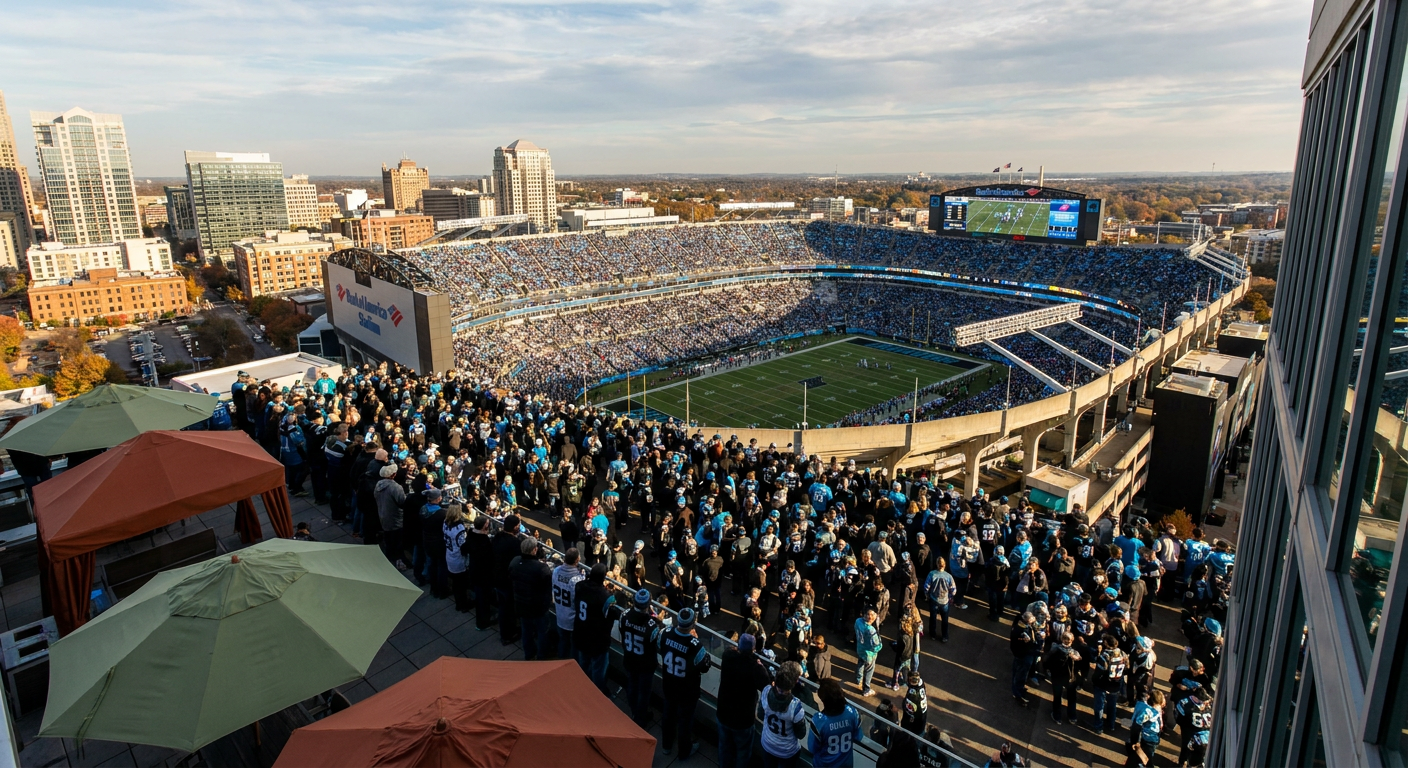
- Demand Profile: The Carolina Panthers’ season kicks off, bringing over 70,000 fans to the Uptown area for eight home game weekends. Corporate conferences return in full force, and the fall brewery scene in South End and NoDa is arguably more popular than in the spring.
- Pricing Strategy: These two months demand the highest rates of the year, period. Panthers home game weekends must be priced as major events. Your base rates should be high, your weekend premiums should be higher, and your event markups must be precise. If you have significant vacancy in October, your pricing or marketing strategy has a fundamental flaw.
November – December: The Holiday Shuffle
Charlotte Airbnb seasonality becomes very spiky here, creating a tale of two distinct markets: the holiday weeks and the quiet weeks in between.
- Demand Profile: Thanksgiving week and the period from Christmas through New Year’s are extremely strong, driven by guests visiting family. The weeks between the holidays, however, can be some of the slowest of the entire year as business travel halts.
- Pricing Strategy: Price the holiday weeks aggressively, often double the base rate or more. For the slow periods in early December, lower your rates to capture the few travelers who are active. This is a time for precision, including offering discounts for longer stays to attract someone needing a place for 2-3 weeks to be near family.
Frequently Asked Questions
What is a co-host and how is it different from property management?
A co-host partners with you to manage your short-term rental, while you, the owner, stay in control. Unlike traditional Charlotte short-term rental property management, where you might sign a long-term contract and hand over the listing, our co-hosting model keeps the Airbnb/VRBO account in your name. You keep the title, the listing, and the direct payouts. We handle the day-to-day operations—pricing, guest communication, cleaning schedules—for a transparent flat fee.
What are the busiest months for an Airbnb in Charlotte?
The busiest and most profitable months for an Airbnb in Charlotte are September and October, which we consider the primary peak season. A secondary peak season runs from March through June. These periods benefit from a combination of major sporting events, corporate travel, university functions, and ideal weather.
How much can my Charlotte property earn as a short-term rental?
Your property's earnings potential depends on its location, size, amenities, and design. Top-performing properties in desirable neighborhoods like South End, Dilworth, or Plaza Midwood can generate significant revenue, especially when priced dynamically to capture peak demand. For a tailored projection, you can use our free revenue estimate tool on the Stayvanah website.
Written by Hemang Bhatt, Charlotte STR realtor and founder of Stayvanah — licensed North Carolina real estate agent with eXp Realty.
Ready to take the next step?
If you own a Charlotte-area property — or you're considering buying one — Stayvanah can give you a real-numbers picture of what it would earn as a short-term rental. We deliver Charlotte short-term rental property management as co-hosting: you keep the title, the listing, and the payouts.
👉 Get your free earnings estimate
Prefer to talk it through? Schedule a call with Hemang — founder of Stayvanah and a licensed NC real estate agent specializing in STR.